Introduction: The "Yiwu" of the Steel World
In the intricate and often opaque world of global B2B trade, sourcing steel remains one of the most challenging procurement tasks for construction firms, infrastructure developers, and manufacturing enterprises. Unlike consumer goods, where e-commerce platforms have democratized access, industrial commodities like steel are still burdened by legacy systems: fragmented supplier networks, inconsistent quality documentation, unreliable lead times, and a chronic lack of transparency. Buyers frequently face a dilemma—choosing between large-scale mills that demand massive minimum orders and offer little customization, or small traders whose credibility is difficult to verify and whose capacity is limited.
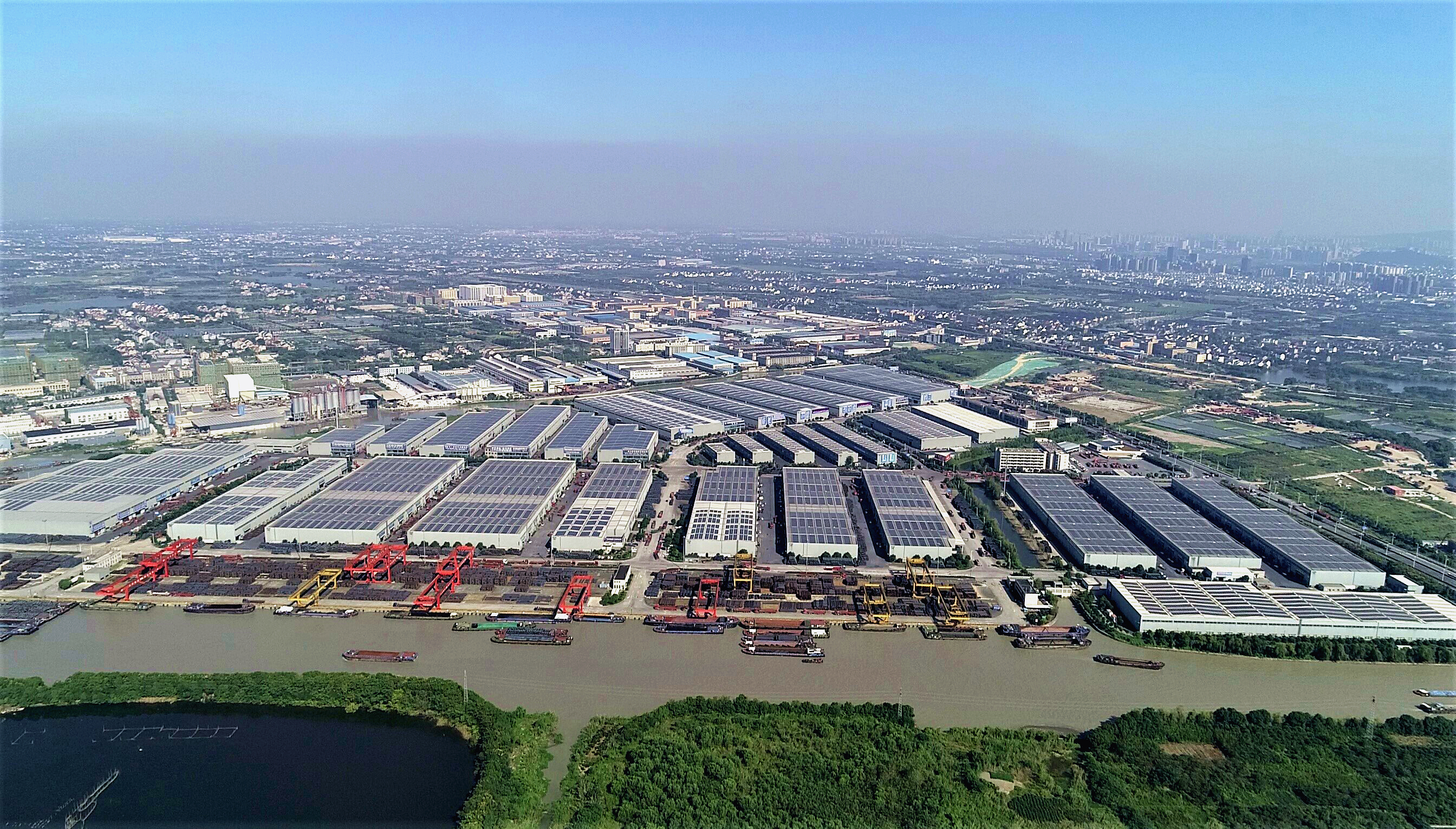
Amid this complexity, Zhejiang Deqing International Steel Market has emerged as a transformative force—a true paradigm shift in how steel is bought, sold, and delivered globally. Established in 2010 and fully operational since 2015, this integrated platform has earned the moniker “the Yiwu Small Commodity Market of the Steel Industry”—a powerful analogy that captures its essence. Just as Yiwu revolutionized global trade in consumer goods through aggregation, standardization, and digital enablement, Deqing is doing the same for heavy industrial materials. Located in Leidian Town, Deqing County, Huzhou City, Zhejiang Province—the heartland of China’s advanced manufacturing ecosystem—it functions not merely as a physical marketplace but as a hybrid digital-physical ecosystem, seamlessly connecting global demand with Chinese supply at unprecedented scale and reliability.
This evolution reflects a broader trend: the convergence of industrial logistics, digital trust infrastructure, and supply chain orchestration. As global infrastructure projects accelerate—from the Belt and Road Initiative to Africa’s urbanization drive—and as manufacturers seek resilient, agile sourcing models post-pandemic, Deqing’s model offers a compelling answer: scale without sacrifice, efficiency without opacity, and flexibility without fragmentation.
Unrivaled Scale and Infrastructure: Building a Steel Metropolis
The physical footprint of Zhejiang Deqing International Steel Market is nothing short of monumental. Covering 2,185 mu (approximately 358.4 acres, or ~1.45 million square meters), with a total built-up area of 550,000 square meters, it constitutes one of the largest dedicated steel trading complexes in the world. To put this in perspective, it is larger than many mid-sized industrial parks and rivals the scale of major port-based logistics hubs.
But size alone is not the differentiator—it is how that scale is leveraged. The market’s core infrastructure includes:
-
Dedicated warehousing zones with climate-controlled storage for sensitive alloys and coated products;
-
Integrated processing centers equipped with CNC cutting, bending, welding, and surface treatment lines;
-
Quality inspection laboratories on-site, capable of performing chemical analysis, tensile testing, and ultrasonic flaw detection per international standards (ASTM, EN, JIS);
-
Digital command center monitoring real-time inventory levels, shipment status, and merchant performance metrics.
Most critically, the market maintains a standing inventory of over 2 million tons of steel products—a strategic buffer that insulates global buyers from market volatility and production bottlenecks. This reserve is dynamically managed, with turnover rates optimized to ensure freshness of stock (e.g., avoiding long-term oxidation of carbon steel) while guaranteeing immediate availability for urgent orders. In an era where just-in-time delivery is increasingly challenged by geopolitical disruptions and port congestion, this inventory depth is a decisive competitive advantage.
Financially, the market’s impact is equally impressive. With an annual transaction volume reaching approximately RMB 50 billion (≈ USD 7 billion), it accounts for a significant share of China’s export-oriented steel trade. This volume is not driven by speculative trading but by verified, contract-based transactions with repeat clients across continents—proof of its reliability and operational maturity.
A Aggregation of Quality: 300+ Certified Merchants — The Power of Curated Ecosystems
One of Deqing’s most innovative features is its merchant-centric governance model. Rather than operating as a single vertically integrated entity, it functions as a rigorously curated ecosystem of over 300 certified merchants, each vetted through a multi-layered due diligence process that includes:
- On-site factory audits (including equipment verification and production capacity assessment);
- Financial health checks and creditworthiness evaluation;
- Compliance with national and international environmental, labor, and safety regulations;
- Submission of valid ISO certifications (e.g., ISO 9001, ISO 14001, OHSAS 18001).
This approach creates a powerful synergy: buyers gain access to the collective expertise and specialization of hundreds of suppliers—without bearing the risk of unvetted third parties. For example, a buyer needing high-tensile rebar for a dam project can source from a merchant specializing in structural steel, while simultaneously procuring corrosion-resistant stainless steel pipes from another merchant within the same platform—all under a unified contract and quality framework.
The product portfolio is exceptionally comprehensive:
-
Profiles: H-beams, I-beams, channels, angles, and custom-section rolled steel for construction and heavy machinery;
-
Plates: Hot-rolled, cold-rolled, medium-thick, and ultra-high-strength plates (e.g., Q345, Q690, AH36/DH36 for shipbuilding);
-
Pipes & Tubes: Seamless, ERW welded, spiral-welded, and OCTG (Oil Country Tubular Goods) for energy and infrastructure;
-
Wires & Rods: High-carbon wire for springs, prestressed concrete, and fasteners;
-
Stainless Steel: Grades 304, 316, 321, 430, and duplex alloys (e.g., 2205) for food processing, pharmaceuticals, and marine applications;
-
Non-Ferrous Metals: Copper cathodes, aluminum ingots, zinc sheets, and brass rods—critical for electrical and automotive sectors.
This breadth enables true consolidated sourcing. A single purchase order can cover everything required for a modular building, a solar farm support structure, or a mining conveyor system—eliminating coordination overhead, reducing procurement cycles from weeks to days, and ensuring material compatibility across the entire build.
Logistical Superiority: The River-Sea Connection — A Strategic Transport Innovation
Location is destiny in global logistics, and Deqing’s positioning is nothing short of strategic genius. Situated at No. 98 Linhang Avenue, the market is integrated with the largest self-built inland river port in China—a purpose-built facility designed specifically for bulk metal handling. This is not a repurposed commercial port; it is engineered for steel: deep-water berths, gantry cranes rated for 50+ tons, automated stacking systems, and direct rail-road-river connectivity.
The river-sea intermodal system is the cornerstone of Deqing’s logistical edge. Steel products move via the East China Sea waterway network—a highly efficient inland canal system linking directly to:
-
Shanghai Yangshan Deep-Water Port (the world’s busiest container port);
-
Ningbo Zhoushan Port (the world’s largest cargo-handling port by tonnage);
- And via the Yangtze River, to Chongqing, Wuhan, and other inland hubs.
This infrastructure allows Deqing to offer flexible, client-centric delivery terms:
-
FOB Deqing Port: Buyer controls freight and insurance from the river port onward;
-
CIF Destination Port: Full shipping and insurance handled by Deqing’s logistics arm;
-
DDP (Delivered Duty Paid): End-to-end solution—including customs clearance, duties, and last-mile delivery—ideal for buyers with limited local presence.
For clients in Southeast Asia (e.g., Vietnam, Indonesia), the Middle East (e.g., UAE, Saudi Arabia), and South America (e.g., Brazil, Chile), this translates into reduced freight costs by 15–25% compared to purely land-based or air-cargo alternatives, and lead times shortened by 7–10 days on average. Moreover, the port’s dedicated handling protocols minimize damage during transshipment—a common pain point for coil and plate shipments.
Crucially, this logistics advantage is not static. Deqing is actively expanding partnerships with global shipping lines (e.g., COSCO, Maersk, MSC) and investing in digital freight management tools that provide real-time GPS tracking, cargo condition monitoring (e.g., humidity, temperature), and predictive arrival analytics—turning logistics from a cost center into a value-adding service.
Digital Trust Infrastructure: Beyond Physical Assets
While physical scale and logistics are foundational, Deqing’s long-term competitiveness lies in its digital trust layer. The platform operates a unified B2B portal where every merchant profile includes:
- Verified factory photos and equipment lists;
- Live inventory dashboards showing real-time stock levels per SKU;
- Downloadable, blockchain-anchored Mill Test Certificates (MTCs);
- Customer review scores and dispute resolution history;
- Video walkthroughs of production lines (on-demand).
This transparency directly addresses the industry’s historic problem of information asymmetry. Buyers no longer need to rely on verbal assurances or third-party inspectors—they can conduct virtual due diligence before initiating contact. For instance, a construction firm in Kenya can verify that a merchant’s 316L stainless steel meets ASTM A240 standards, confirm its current stock of 6mm-thick plates, and even request a live video feed of the coil being cut to their exact dimensions—all before signing a contract.
Furthermore, the platform supports smart contracts and escrow payment solutions, ensuring financial security for both parties. In cases of quality disputes, Deqing’s independent arbitration panel—comprising metallurgists, engineers, and legal experts—provides binding resolutions within 14 business days, far faster than traditional litigation.
Conclusion: A Trusted Global Partner for the Next Decade of Industrial Growth
Over the past 15 years, Zhejiang Deqing International Steel Market has evolved from a regional trading hub into a globally recognized Digital Trust Center for Industrial Materials. Its success is not accidental but the result of a deliberate strategy: combining the scale of a commodity exchange, the quality control of a Tier-1 OEM, and the agility of a digital marketplace.
For international buyers—be they government procurement agencies, multinational contractors, or SME manufacturers—Deqing represents more than a vendor. It is a strategic partner that de-risks sourcing, accelerates project timelines, and unlocks new levels of operational efficiency. Whether supplying structural steel for a $2 billion metro project in Riyadh, precision-fabricated components for an EV battery plant in Thailand, or durable alloy pipes for offshore drilling in Angola, Deqing delivers with consistency, speed, and integrity.
As the world embarks on a new wave of infrastructure development, green energy transition, and industrial modernization, the demand for reliable, transparent, and flexible steel sourcing will only intensify. Zhejiang Deqing International Steel Market is not just meeting that demand—it is setting the standard for what the future of global industrial trade should look like: connected, credible, and relentlessly customer-focused.
In the words of one long-term client from Colombia: “Before Deqing, we spent months chasing suppliers. Now, we place an order on Monday and receive certified, fabricated steel by Friday. That’s not just efficiency—that’s transformation.”
 EN
EN




